
Innovative Water Curtain Technology: Redefining Aesthetics and Function in Commercial and Public Spaces
In the field of environmental design, water curtains have emerged as a key landscape feature that blends natural elements with modern technology, offering unique visual appeal and environmental benefits to enhance spatial quality. Unlike traditional static decorations—such as sculptures, planters, or wall murals—water curtains introduce a living, ever‑changing element that captivates the human eye and ear through the constant motion of falling water. They create a dynamic and continuous visual interface, serving both as a soft spatial partition that subtly delineates functional zones without obstructing sightlines, and as a captivating focal point that draws visitors into the experience. The gentle sound of cascading water also contributes to acoustic comfort, masking unwanted urban noise and fostering a tranquil atmosphere in busy commercial or public settings.
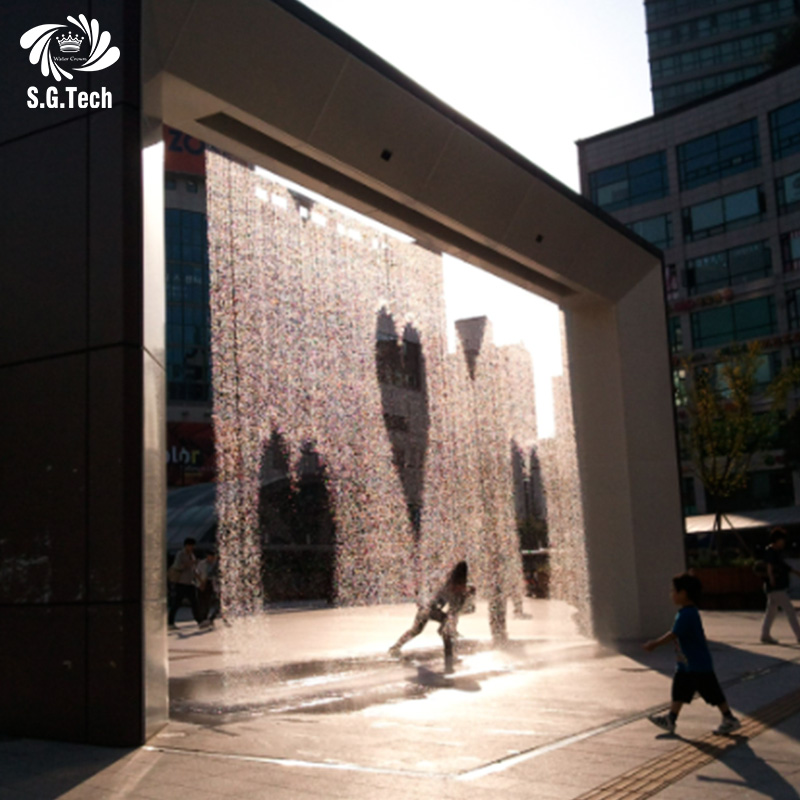
The design of water curtain systems emphasizes seamless integration with architectural environments. Using precise water flow control technology—including adjustable pressure pumps, precision‑engineered nozzles, and flow‑straightening vanes—they can achieve effects ranging from smooth and uniformly laminar sheets that resemble glass panels, to rhythmic and pulsating patterns that mimic rain or natural waterfalls. This versatility allows water curtains to complement diverse architectural styles, from minimalist modern facades with clean geometric lines to classic retro interiors adorned with ornamental details. The form and scale of water curtains can be flexibly adapted to spatial requirements: a narrow, floor‑to‑ceiling curtain can act as an iconic entrance feature that greets visitors with a shimmering veil; a wide, tiered installation can animate an indoor atrium, casting dancing reflections on surrounding surfaces; or an interactive ground‑level array can invite pedestrians in outdoor plazas to walk through or touch the water, effectively enhancing a space’s identity and experiential value. Moreover, customisable shapes—curved, angled, or even circular—enable designers to integrate water curtains into columns, staircases, and overhead canopies, expanding creative possibilities beyond conventional rectangular formats.
Functionally, water curtains offer not only aesthetic value but also practical environmental benefits. Their evaporative cooling effect helps reduce ambient temperatures in hot climates by absorbing latent heat, which can lower the surrounding air temperature by 2–4°C in outdoor or semi‑open areas, thereby reducing the cooling load on nearby HVAC systems. At the same time, they increase air humidity, creating a more comfortable micro‑environment in arid regions or air‑conditioned spaces that tend to dry out the atmosphere. Coupled with highly efficient water circulation and filtration systems—including multi‑stage sediment filters, UV sterilisation, and automatic backwashing—water curtains promote sustainable water usage by recirculating the same water with minimal make‑up losses (typically less than 5% per day due to evaporation and splashing). This closed‑loop approach reflects an eco‑friendly design ethos, and when combined with rainwater harvesting or greywater reuse, it can further reduce potable water consumption, aligning with green building certifications such as LEED or BREEAM.
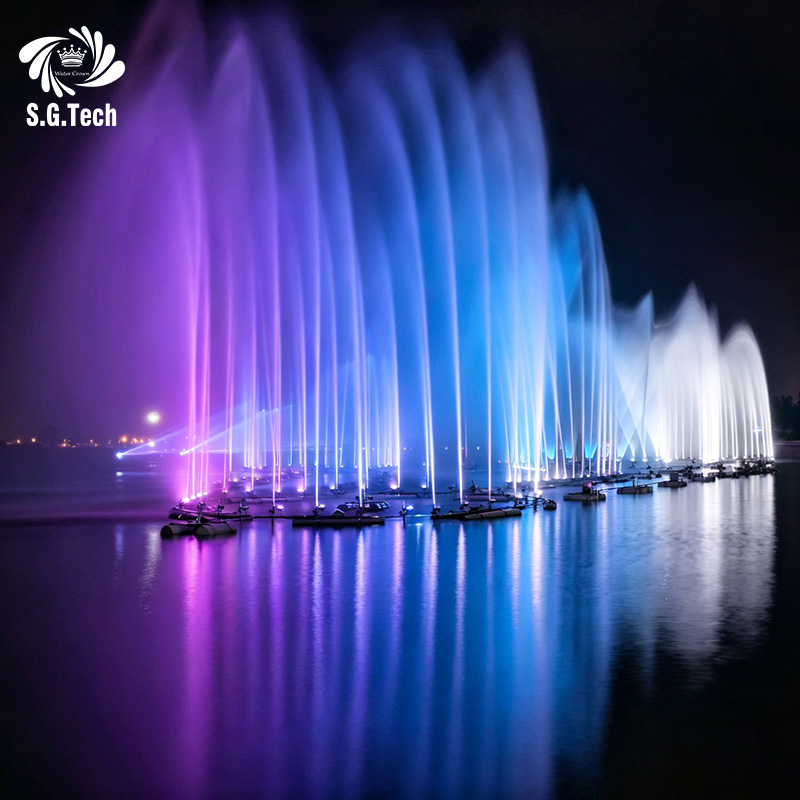
Technology integration further expands the application potential of water curtains. Intelligent control systems—equipped with programmable logic controllers and touch‑screen interfaces—allow users to programme water flow rates, nozzle oscillation patterns, lighting colours, and dynamic sequences to suit different times, seasons, or thematic events. For instance, a water curtain can display a calm, monochrome flow during office hours, then transform into a vibrant, colour‑changing spectacle with synchronised music for evening entertainment. When combined with multimedia projection, water curtains can become platforms for information display or artistic expression: high‑resolution video can be projected directly onto the falling water sheet, creating striking visual content that advertises brands, communicates public messages, or showcases digital art. This innovative medium offers a memorable alternative to conventional LED screens, as the semi‑transparent water surface adds depth, motion, and a sense of ephemeral beauty, making it particularly effective for cultural events, product launches, and museum exhibitions.
As urban development and spatial upgrade needs grow, the dynamic water feature technology represented by water curtains continues to evolve. Modern systems incorporate energy‑efficient variable‑frequency drives that adjust pump output according to real‑time demand, saving up to 40% of electricity compared to fixed‑speed alternatives. Low‑voltage LED lighting further reduces power consumption while offering millions of colour options and long service life. Durability is assured through the use of corrosion‑resistant materials—stainless steel 316L, anodised aluminium, and UV‑stabilised polymers—which withstand harsh weather, chemical exposure, and mechanical wear, ensuring reliable operation for decades with minimal degradation. Their low maintenance requirements, thanks to self‑cleaning nozzles and remote diagnostic capabilities, make them an ideal choice for long‑term investment, reducing the total cost of ownership and freeing facility staff from frequent manual interventions.
Through professional design and technical implementation, water curtains can turn ordinary spaces into captivating experiential environments, fostering lasting visual and emotional connections. They invite interaction, contemplation, and wonder, transforming passive viewing into active engagement. Choosing an advanced water curtain solution signifies a commitment to innovative design and environmental responsibility. From customised planning—including hydrological modelling, structural integration, and acoustic analysis—to integrated implementation and post‑installation performance tuning, every stage is supported by professional expertise to ensure that each installation delivers stunning visual impact while maintaining stable and efficient long‑term performance. With continuous advancements in smart sensors, AI‑driven pattern generation, and sustainable materials, the future of water curtains promises even greater creative freedom and ecological harmony, making them an enduring asset for any forward‑thinking architectural project. Whether for a luxury hotel lobby, a corporate headquarters, a shopping mall, or a public park, water curtains represent a sophisticated fusion of art, engineering, and nature—an investment that enriches both the built environment and the human spirit.
Guangdong Water Crown Environment Technology Co., Ltd.: Creating a Dynamic Water Landscape with Innovative Fountain Projects
Water Curtain Art and Technology Integration: Creating New Immersive Environmental Experiences